Earth and Elegance: Meet Valkonda
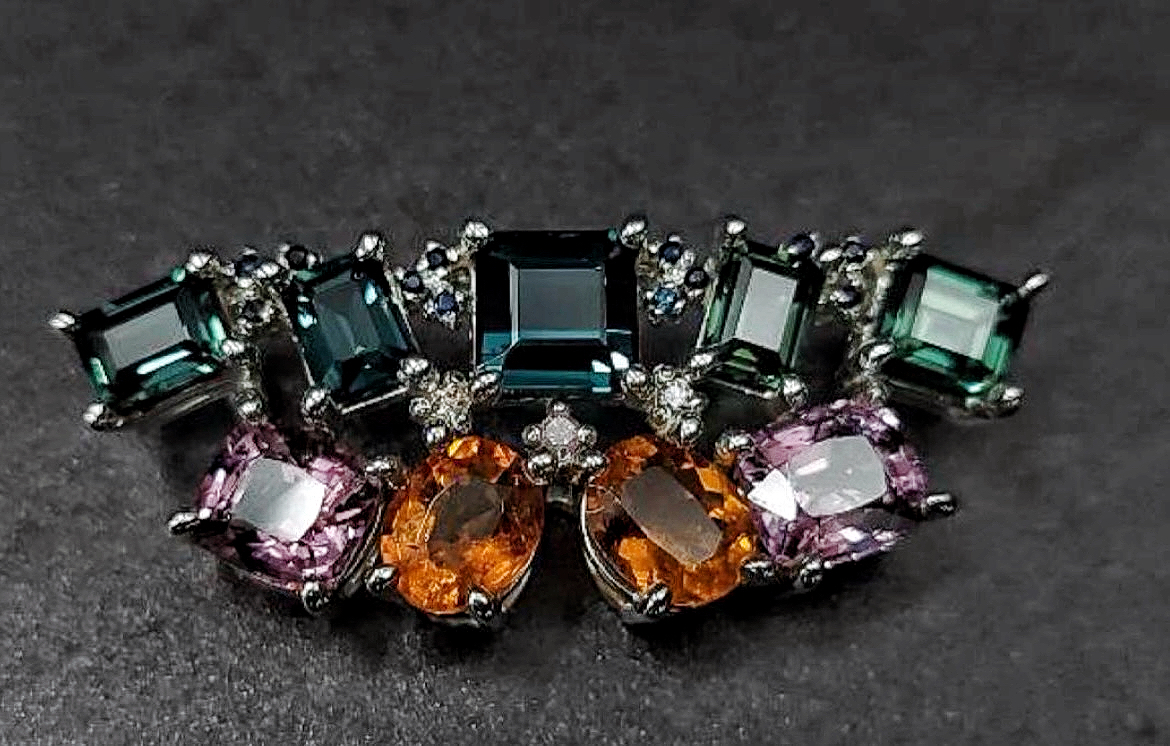
Founded on a deep reverence for nature, storytelling, and craftsmanship, Valkonda is a fine jewelry brand that treats gemstones as living archives of the Earth’s history. Drawing inspiration from coral reefs, the mineral-rich Ural Mountains, and the innovation of Fabergé designer Alma Pihl, Valkonda is guided by a gem-first philosophy that places color and origin at the center of every design. Known for its elegant, vibrant, and timeless aesthetic, the brand favors colored gemstones and pearls over convention, with green stones such as tsavorites and garnets forming the visual heartbeat of its collections. Balancing traditional handcraft with modern technology, Valkonda works closely with trusted artisans and ethical suppliers to ensure transparency, traceability, and intention at every stage of creation.
Below, the founder of Valkonda, Valeriya Chisholm, shares her journey into jewelry, creative influences, design philosophy, and perspective on how the next generation is reshaping the fine jewelry industry, offering insight into the values, stories, and ideas driving the brand forward. Part of this interview appeared in the latest issue of Gems & Jewellery Magazine.
Can you share your journey into jewelry, and what first inspired you to become a jeweler or designer?
My journey into jewelry began when I was just seven years old, collecting smooth little pebbles on nature walks with my mom and stringing them into makeshift necklaces and bracelets. Even then, I was fascinated by how something simple and organic could be transformed into something precious and meaningful with just a bit of imagination. That early curiosity deepened as I grew older and spent hours exploring my grandmother’s antique jewelry collection. Each piece told a story—of craftsmanship, history, and love—and I became captivated by the idea that jewelry could carry emotion and memory in such a tangible way.
Nature has remained my greatest muse throughout this journey. I’m especially inspired by coral reefs: their vibrant colors, intricate forms, and fragile beauty remind me of both the creativity and the responsibility that come with design. They fuel not only the aesthetics of my work but also my commitment to sustainability and ethical sourcing.
Ultimately, these experiences led me to create Valkonda, a brand born from the desire to merge artistry, science, and reverence for the natural world. Every piece I design reflects that vision: rooted in storytelling, inspired by the earth, and crafted with a deep respect for the delicate balance of nature.
How does your generation’s perspective reflected in the way you design or run your business?
As a Millennial, I approach jewelry with the belief that it should be far more than just beautiful — it should carry meaning, purpose, and integrity in every facet. My generation grew up during a time of rapid change, where conversations around sustainability, ethics, and authenticity became central to how we consume and create. That perspective shapes everything I do, from design to sourcing to the way I build my brand’s values.
For me, jewelry isn’t just an accessory — it’s a form of storytelling and self-expression. People today, especially younger buyers, want pieces that reflect their values as much as their style. They care about where materials come from, how artisans are treated, and whether their purchase has a positive impact. That’s why I prioritize transparency in my supply chain, use responsibly sourced materials, and design pieces that feel timeless yet personal — objects meant to be cherished, not discarded with changing trends.
This generational mindset also informs how I run my business. I see my clients as co-creators, and I use technology and storytelling to build deeper relationships rather than just transactions. In that way, my Millennial perspective isn’t just reflected in the jewelry itself — it’s woven into every choice I make as a designer and entrepreneur.
Who or what are some of your biggest creative influences?
One of my greatest creative influences is Alma Pihl, the pioneering designer behind some of Fabergé’s most iconic creations. I’ve always admired her ability to blend innovation with refined simplicity, and the way she carved out a place for herself in what was, at the time, a male-dominated industry. Her work proves that true artistry doesn’t have to shout — it can be subtle, deliberate, and deeply meaningful.
I’m inspired not only by her technical brilliance and imaginative vision, but also by her courage and perseverance. She transformed everyday inspiration — from snowflakes to nature’s delicate patterns — into exquisite, timeless works of art. That approach resonates deeply with me and continues to influence how I think about design: the balance between craftsmanship and creativity, strength and softness, heritage and modernity.
How would you describe your design aesthetic in three words?
Elegance is at the heart of everything I design — each piece is meant to feel refined and sophisticated, with a sense of balance and restraint that allows the materials and craftsmanship to speak for themselves. Vibrancy reflects both my love of color and my fascination with the natural world; I draw inspiration from coral reefs, gemstones, and organic forms that bring energy and life to my work. And timelessness is my goal: to create jewelry that transcends trends, pieces that feel as relevant and beautiful decades from now as they do today, carrying stories and meaning that endure across generations.
Describe a new collection, or collection, you’re working on and the story behind it.
Color has always been at the core of my creative identity, and my newest collection is a bold expression of that philosophy. Green is the heartbeat of my brand — a color that symbolizes renewal, vitality, and the enduring beauty of nature. Rather than relying on traditional white diamonds, I’ve embraced something far more distinctive: melee green garnets and tsavorites. Their vivid, luminous tones add depth and character to each piece, while also setting my work apart in an industry that often defaults to convention.
My designs are deeply inspired by organic forms — leaves, vines, coral patterns — and this nature-driven aesthetic continues to guide the collection. But this season, I’m weaving that inspiration into a new kind of narrative: a collection inspired by House of the Dragon and the dynamic, often rivalrous relationship between Princess Rhaenyra and Queen Alicent. Each piece reflects the duality of their characters — strength and vulnerability, power and restraint, passion and poise.
The result is a series of creations that are not only visually striking but also rich in symbolism and storytelling. It’s a collection that celebrates individuality and complexity, inviting the wearer to embody both resilience and elegance — much like the powerful women who inspired it.
What role does technology play in your design process (e.g., CAD, 3D printing, digital sketching)?
Some of my earliest pieces were created entirely by hand, without any technological assistance — just traditional tools, patience, and the slow, meticulous process of shaping metal and setting stones. That foundation remains deeply important to me because it connects my work to centuries of craftsmanship and the human touch that makes jewelry truly special. But I also recognize that the landscape of our industry is changing, and to remain relevant and innovative, adaptation is essential.
Today, technology plays a significant role in my creative process. I use CAD (computer-aided design) and digital modeling tools to bring ideas to life with greater precision and speed. These tools allow me to explore complex forms and fine details that might be difficult or time-consuming to achieve by hand alone. They also streamline production by reducing the number of revisions and shortening the overall design-to-fabrication timeline — an important advantage in a fast-moving, competitive industry.
Beyond efficiency, I see technology as a way to democratize the craft. In the past, becoming a jeweler required years of apprenticeship, often unpaid and inaccessible to many. Now, digital tools empower younger generations to enter the field more quickly, experiment more freely, and push creative boundaries without losing respect for tradition. My approach blends the best of both worlds: the artistry and soul of handcrafting with the precision and innovation that modern technology makes possible.
What values are reflected in your work (responsible sourcing, sustainability, other etc.), and how do you integrate those values into your collections?
At the heart of my work is a deep respect for the story behind every piece — from the gemstone’s origin to the hands that shape it. I believe jewelry is most powerful when it carries meaning, and that meaning begins long before a piece reaches the wearer. For me, it’s essential to know where each stone comes from, when and how it was sourced, and the circumstances that brought it from mine to market. Understanding its journey — and being able to share that story — creates a more personal and emotional connection between the piece and the person who wears it.
In a world saturated with beautiful objects, what people truly seek today are meaningful ones. They want to feel a sense of continuity — to know that their jewelry is not just aesthetically pleasing but also ethically considered and consciously made. That’s why I prioritize responsible sourcing, transparency, and traceability in every stage of production. I work closely with trusted dealers and cutters who share my values, ensuring that each gem has a verifiable history and is handled with integrity.
But responsibility extends beyond materials. I also believe that the energy and care invested in the making of a piece become part of its essence. I’m very mindful of the human element in my craft — I always check in with my polisher, setter, and other artisans to ensure they want to work on a particular piece and feel inspired by it. If they’re overwhelmed or not in the right mindset, I never push. Jewelry, in my view, holds the state of mind of those who create it. When every person involved feels connected to the work, the result is something infused with intention, respect, and soul — qualities that I hope every wearer can feel when they put it on.
Many younger jewelers emphasize storytelling. What story do you share with your jewelry?
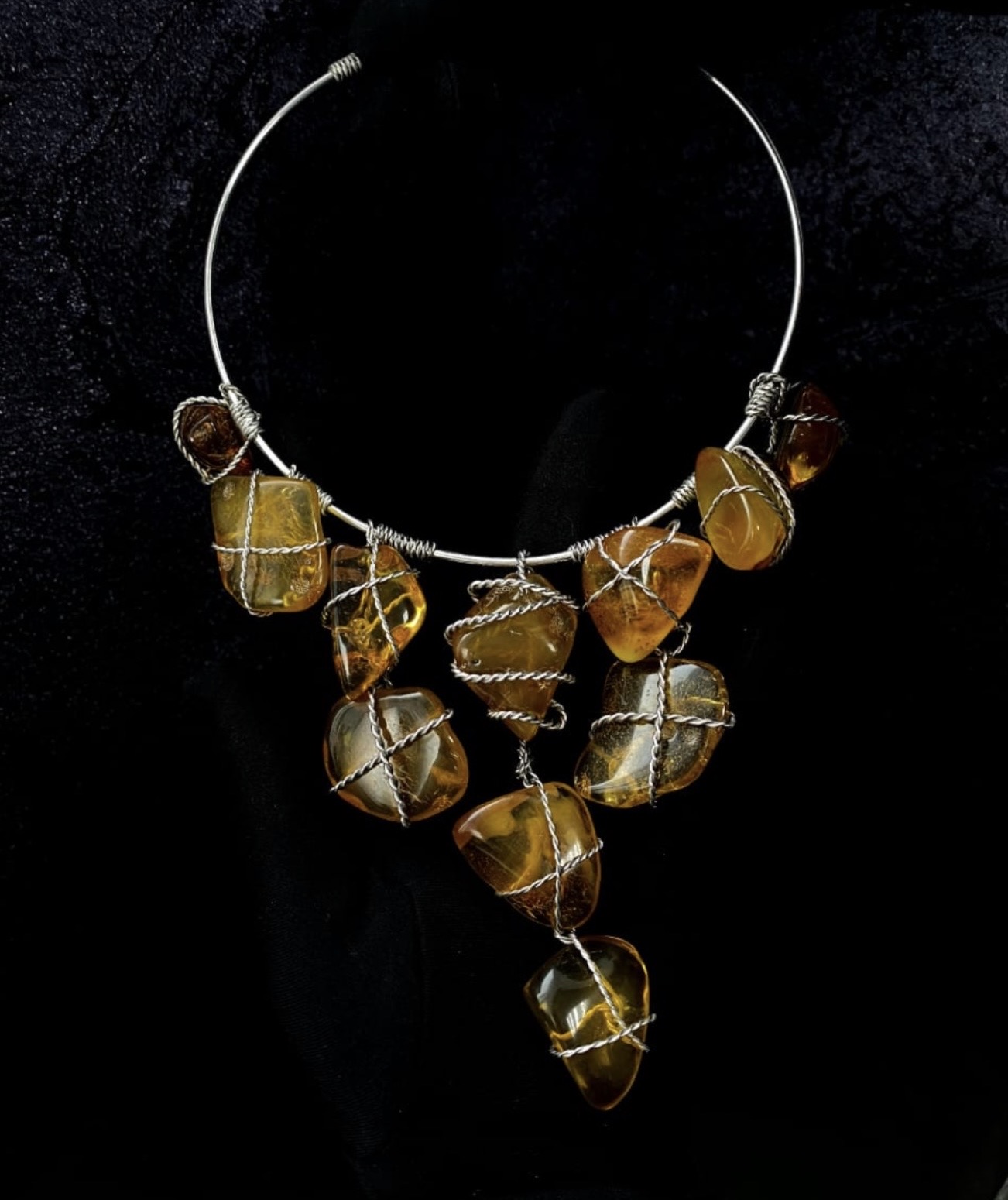
For me, every piece of jewelry is a story — and that story always begins with a gemstone. Each gem is a fragment of the Earth’s history, shaped by time, pressure, and elemental forces over millions of years. I choose stones not just for their color or clarity, but for their unique character — the subtle inclusions that hint at their origins, the glow that feels alive from within, the sense that they have witnessed eons before finding their way into my hands. They are nature’s storytellers, and my role is simply to give their voice a new form.
Much of my creative language is rooted in the landscapes of my childhood. I grew up surrounded by the raw, untamed beauty of the Ural Mountains — a place rich in mineral treasures, dense forests, and shifting light. That environment taught me to see gemstones not as mere adornments, but as living expressions of the Earth itself. It’s also where I first learned to look closely: to notice the way color changes in natural light, how textures echo patterns in nature, and how something formed deep underground can capture the essence of a place and a moment in time.
When I design, I try to preserve and extend that story — weaving in layers of mythology, natural history, and human emotion. Each piece is meant to be more than a beautiful object; it’s an invitation to connect with the Earth’s memory, to carry a small piece of its ancient narrative, and to make it part of your own. In that sense, every jewel I create is not just an accessory — it’s a bridge between past and present, between the natural world and the personal stories we build around it.
What challenges do you face as a younger jeweler entering or navigating the industry?
One of the biggest challenges I face as a younger jeweler — and a first-generation one — is entering an industry that is, in many ways, built on legacy. Most jewelry houses are second- or third-generation family businesses, with networks, supplier relationships, and client trust established over decades. Coming into that world without a long family lineage behind me means I often must work twice as hard to build credibility, prove my expertise, and earn the same level of respect.
Being a woman in this space adds another layer of complexity. Negotiating gemstone prices, for example, can sometimes be more difficult, as many suppliers and dealers have longstanding relationships and expectations shaped by tradition — relationships that don’t always make space for new voices. Similarly, finding artisans and specialists skilled in rare techniques for more experimental or creative pieces can be challenging, as those crafts are often passed down within tight-knit circles.
Yet, while these challenges are real, they’ve also shaped my approach and strengthened my resolve. They’ve taught me persistence, adaptability, and the importance of building my own network rooted in shared values and mutual respect. They’ve also pushed me to think creatively about collaboration — often working across disciplines or seeking out emerging talent to bring my ideas to life. In many ways, navigating these obstacles is part of what makes my work distinctive: it’s born not from inherited tradition, but from a deliberate, self-made journey defined by curiosity, determination, and a commitment to carving out my own place in the industry.
How do you balance artistry with the practical demands of running a business?
For many designers, balancing the creative side of jewelry-making with the practical realities of running a business can be one of the most difficult parts of the job. For me, however, that balance comes more naturally because of my background in finance and accounting. Before launching my jewelry line, I built a strong foundation in those fields, which taught me how to approach budgeting, forecasting, pricing, and operations with discipline and clarity. That experience now serves as one of my greatest assets.
It allows me to see the business not just as a creative pursuit but as an ecosystem — one where artistry and strategy must work hand in hand. I’m able to manage cash flow, allocate resources efficiently, and plan for growth without losing sight of the artistic vision that drives the brand. This dual perspective also helps me make smarter decisions around production, sourcing, and marketing, ensuring that creativity is always supported by a solid financial structure.
At the same time, I’m careful to protect the creative process itself. I give myself space to experiment, explore new ideas, and take design risks — but always within a framework that keeps the business sustainable. Ultimately, I see artistry and business not as opposing forces, but as complementary ones: creativity gives the brand its soul, while sound financial management ensures that soul can thrive and reach the people it’s meant to inspire.
Do you think social media platforms (Instagram, TikTok, Pinterest) are changing how jewelry is designed, marketed, and sold? How do they affect your business?
Social media has transformed every part of the jewelry world — from how pieces are designed to how they’re shared, discovered, and ultimately purchased. For me, these platforms are far more than just sales tools; they’re creative ecosystems that allow ideas, stories, and relationships to flourish in ways that were unimaginable just a decade ago.
On Instagram, for example, I’m in constant dialogue with clients, collectors, and fellow jewelry lovers. It’s a space where I can test ideas, showcase works in progress, and observe what resonates on an emotional level — whether it’s a particular gemstone, a color palette, or a design motif. That feedback loop often directly influences my creative decisions and can even spark the concept for an entirely new collection. Many custom projects also begin there — often from something as simple as a comment, a saved post, or a direct message.
Platforms like YouTube serve a different but equally important purpose. They allow me to share the deeper layers behind the jewelry — the science of gemstones, the cultural symbolism, the history of materials — and in doing so, build trust, curiosity, and a more educated audience. This educational storytelling is central to my brand philosophy: it transforms jewelry from a product into an experience and a conversation.
At Valkonda, we focus on what I call visual poetry — using digital storytelling to highlight the natural textures of gems, the intricacies of craftsmanship, and the emotional meaning woven into each piece. The beauty of social media is that it democratizes access: a small, artisan-driven brand like mine can now reach collectors in Paris, Tokyo, or New York instantly, without the traditional gatekeepers of luxury retail. It’s made the industry more open, personal, and story-driven — and it has fundamentally changed how I design, communicate, and connect with the world.
How have mentorship or peer networks played a role in your career so far?
Mentorship has played an essential role in shaping both my creative journey and my business strategy. From the very beginning, I’ve been fortunate to learn from mentors with strong backgrounds in finance and entrepreneurship — people who helped me understand that creativity alone isn’t enough to sustain a brand. Their guidance taught me one of the most fundamental lessons of running a successful jewelry business: you cannot stay in business if the numbers don’t work.
Those early conversations were eye-opening. I learned how to manage a company using the resources I already had rather than relying heavily on outside investors and giving up control too early. That approach allowed me to stay true to my vision, maintain creative independence, and build the brand on my own terms. My mentors also emphasized the importance of strategic growth — focusing on profitability, careful budgeting, and smart reinvestment — lessons that continue to shape every decision I make.
Another critical takeaway from mentorship has been the value of putting the client experience at the center of everything I do. My mentors reinforced that satisfied clients are the foundation of long-term success. By prioritizing quality, transparency, and personal connection over short-term gains, I’ve been able to steadily grow my client base and expand my business organically.
Peer networks have also been incredibly important. Collaborating with other designers, gemologists, and small business owners has given me fresh perspectives, new skills, and a support system that makes the entrepreneurial journey far less isolating. Together, mentorship and community have been instrumental in helping me evolve — not just as a designer, but as a resilient, strategic entrepreneur.
Do you collaborate with other designers, artists, or industries to expand your creative practice?
At this stage in my career, I haven’t yet collaborated with other designers, artists, or industries — partly because I’m still deeply immersed in developing my own creative language and refining the identity of my brand. My inspiration feels endless now, and I’m constantly exploring new ideas, materials, and concepts within my own practice. That said, I’m very open to the idea of collaboration in the future.
I see tremendous potential in cross-disciplinary work, especially when it comes to blending jewelry with other creative fields like fashion, architecture, or even digital art. Collaboration has the power to push boundaries, spark new ideas, and lead to unexpected outcomes — and that’s something that deeply excites me as a designer. It’s less about “running out of ideas” and more about evolving creatively, learning from different perspectives, and finding innovative ways to tell stories through jewelry.
So while collaboration hasn’t been part of my journey yet, I view it as a natural and exciting next chapter — one that, when the timing and vision are right, could open up entirely new dimensions in my work.
If you could redefine or change one thing about the jewelry industry, what would it be?
If I could change one thing about the jewelry industry, it would be the way we define and measure value. Too often, value is reduced to numbers — clarity grades, carat weights, market prices — as if a gemstone’s worth can be summed up by technical metrics or its position on a price chart. While those factors have their place, they only tell part of the story. True value, to me, lies in the journey — in how a gemstone was formed deep within the Earth over millions of years, in the hands that carefully shaped and set it, and in the meaning it carries once it becomes part of someone’s life.
I believe jewelry should be appreciated not just as a luxury commodity but as a form of art, culture, and human expression. Each piece is a collaboration between nature and craftsmanship, science and storytelling, material and emotion. When we view jewelry through that lens, we begin to see it not as a fleeting fashion statement but as an heirloom — something with the power to hold memory, identity, and connection across generations.
Redefining value in this way would also make the industry more inclusive and imaginative. It would shift the focus away from superficial status symbols and toward pieces that are meaningful, sustainably sourced, thoughtfully made, and deeply personal. Jewelry has always been more than an accessory — it’s a bridge between the Earth’s ancient past and our most intimate human experiences. I hope the industry continues to evolve in that direction.
For more information and behind-the-scenes updates, follow Valkonda on Instagram: @valkonda