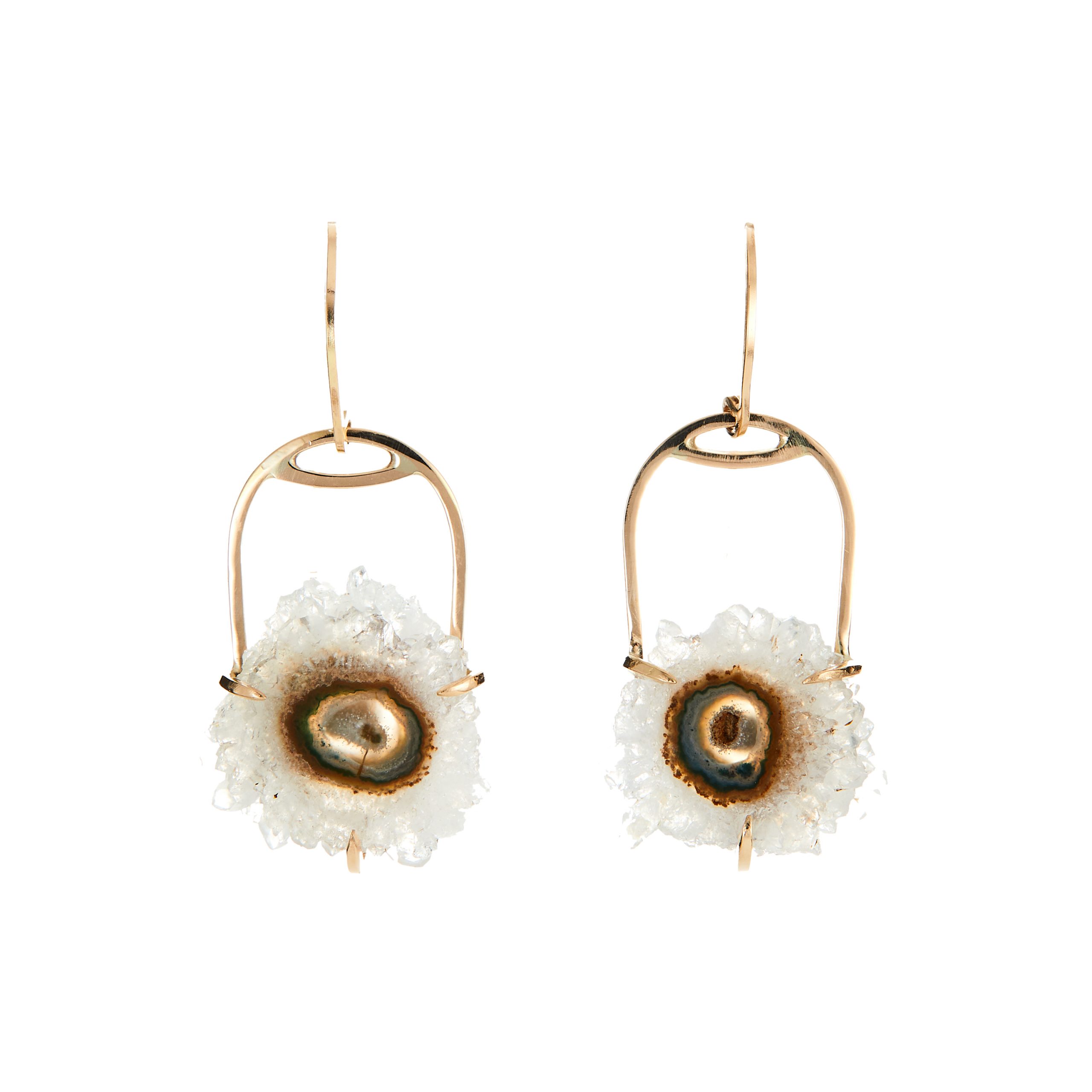
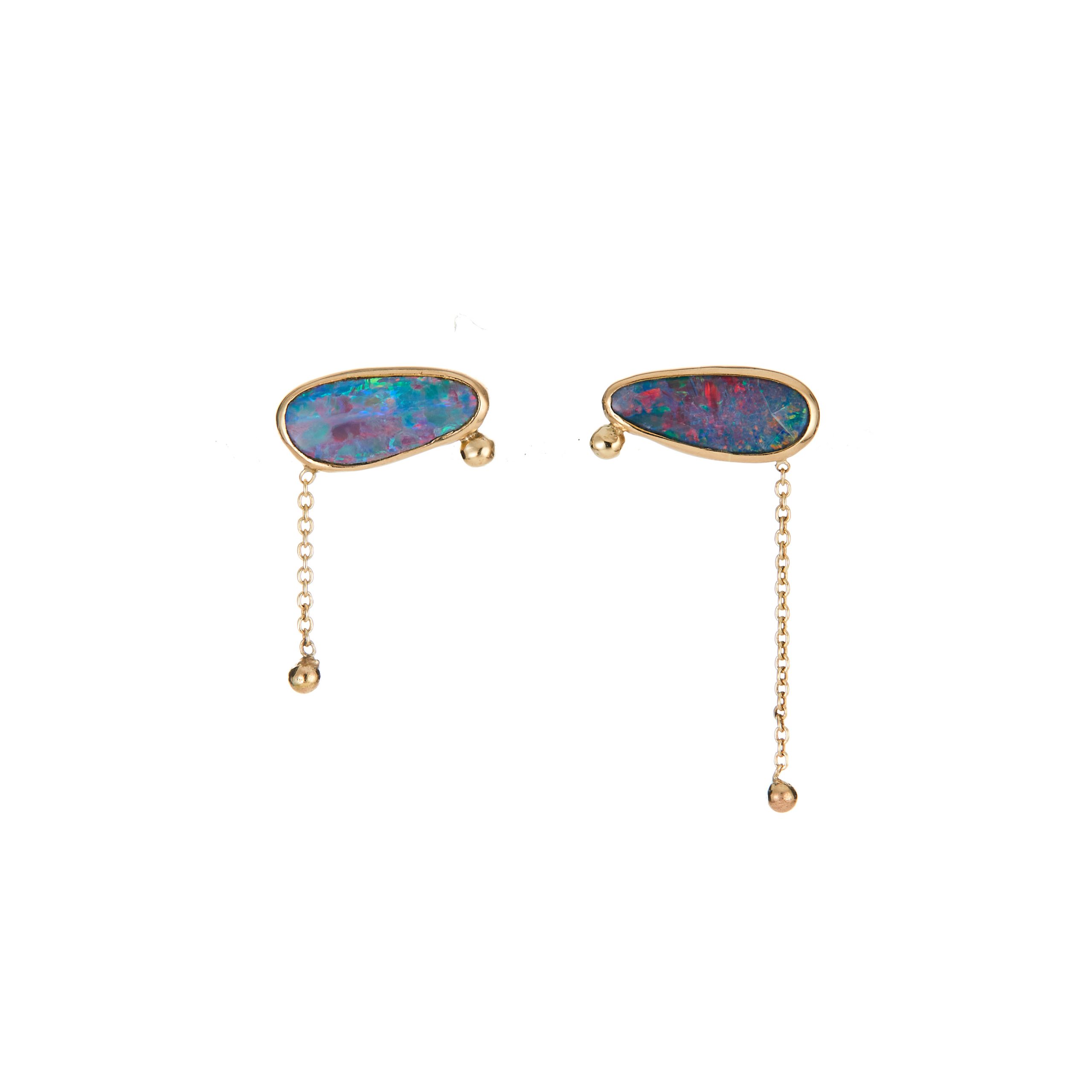
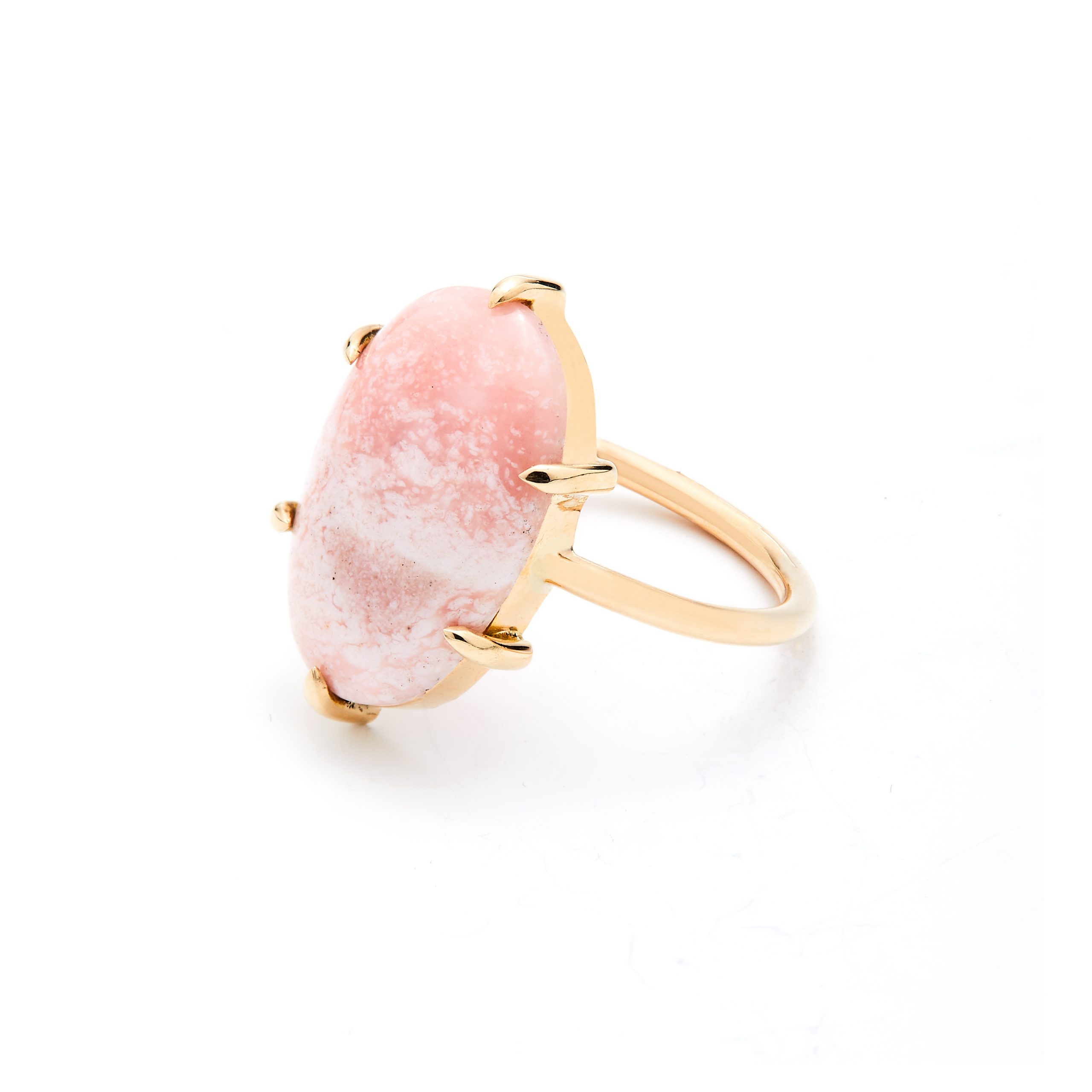
Myth and Material with Becky Dunn Design
This interview appeared in an article on Millennial Jewelers in Volume 24, Issue 3 of Gem-A’s Gems & Jewellery Magazine. Across studios from New York to Geneva, a new guard of millennial designers is reshaping fine jewellery with intention at its core. Groundbreaking jewellers are part of a generation that was born roughly between 1981–1996 and are known to prioritise real-life experiences; ethical, sustainable consumption, and self-expression. These attitudes are shaping the jewellery industry of the future. Members of the trade and customers alike prize resonance over spectacle, story over trend and craftsmanship that is meant to be worn. In their hands, gold becomes language, stones become memory and technology is a tool in service of touch.
The feature brought together eight distinct voices, whose work spans sound and science, antiquity and imagination, architectural restraint, colour and connection, heritage and modern grace. Each designer invites us to see jewellery not only as adornment, but as a way to mark who we are and how we move through the world. Meet…
BECKY DUNN DESIGN. SCULPTING MAGIC FROM METAL AND MEMORY
Becky Dunn, Owner and Founder
Instagram: @becky_dunn_design
For the Australian-born founder of Becky Dunn Design, jewellery is the meeting place between imagination and form. It is a space where fantasy becomes tangible, and art takes shape as wearable sculpture. “I think there’s a synergy between sculpture and jewellery design,” Becky Dunn explained. “It’s a common leap from one to the other.” That leap came early for Ms Dunn; after studying fine art and majoring in sculpture, her fascination with material, proportion and movement led her to enrol in a three-year jewellery and object design programme in her hometown of Sydney. “I fell absolutely in love with it,” she reminisced. “Eighteen years later, I still very much am.” Since then, Ms Dunn has carved an unconventional path, working both as a bench jeweller and production manager for some of New York City’s leading jewellery houses, all while building her namesake brand. “I moved to New York fourteen years ago to learn everything I could about the industry. The world—and business—has changed so much since then. Millennials like me have had to constantly adapt, evolve and stay resilient. We’ve learned how to balance innovation with empathy.
Can you share your journey into jewelry, and what first inspired you to become a jeweler or designer?
My jewelry designer origin story began in a similar way to how I’ve heard a lot of jewelry designers describe theirs – I went to art school and majored in sculpture. I think there’s a synergy between sculpture and jewelry design, and it’s a common leap from one to the other.
After I left art school I enrolled in Jewellery and Object Design, an incredible 3 year comprehensive course in my home town of Sydney, Australia, and fell absolutely in love with it. And 18 years later, I still very much am.
How does your generation’s perspective (Gen Z/Millennial) get reflected in the way you design or run your business?
I think that being a Millennial affects so many areas of running a jewelry business. I moved to New York over 14 years ago to learn everything I could about the jewelry industry here, and have worked as both a bench jeweler and production manager for many NYC based jewelry companies while also running my own jewelry business. The industry has changed so much in that time, and the world has changed so much. I think millennials have become so used to keeping up with those changes and shifting and adapting to the times, where previous generations didn’t have to deal with things changing quite so quickly or frequently. I also think we have so much patience and compassion for those coming up in the industry now, and I think we tend to be more understanding bosses and clients.
Who or what are some of your biggest creative influences?
I was an avid reader and lover of all things fantasy growing up. My favorite movie as a child was Jim Henson’s Labyrinth, so much so that I went to art school because I wanted to be like the film’s conceptual artist, Brian Froud. As an adult I am inspired mainly by my favorite sculptors, Lee Bul, Olafur Eliasson, Fiona Hall and Anish Kapur to name a few.
How would you describe your design aesthetic in three words?
My design aesthetic is textural, mystical and playful.
Describe a new collection, or collection, you’re working on and the story behind it.
My latest collection is called The Muses, and was inspired by the female muses of ancient Greek literature. Throughout history muses have often been stereotyped as alluring women who were passive sources of inspiration for male artists, and I was inspired by one of my favorite musicians who made a podcast a few years ago that flipped the narrative back to the achievements of the women who inspired the artists, the muses themselves. A little bit of the old world meeting the new, which is a common theme running through my pieces.
What is a jewelry that you designed that has a particularly meaningful story for you?
I designed the Erato Sygnet Ring from the Muses collection for my partner. It features a bloodstone, said to offer protection and offer wearer strength and courage. It’s the only jewelry he wears and it means the world to me to see him wear it.
Do you see yourself as keeping jewelry making traditions alive, reinventing them, or creating something entirely new?
We are currently in an age where making jewelry has never been more accessible. Anyone with no background in it can pay someone to create a CAD, print the piece in wax and cast it in metal, find a jeweler to set some stones and sell the product on Tiktok, with no real understanding of what goes into making the piece. I love the idea of keeping the artistry and artisanship of it alive, especially when that side of it is becoming such a dying art. But at the same time I always strive to do that in a modern way.
What role does technology play in your design process (e.g., CAD, 3D printing, digital sketching)?
I’m actually quite old school in my approach to designing. As ground breaking and useful as I find CAD, I am at heart always a maker and a fan of traditional artisanship. I think that CAD has simplified the design process immeasurably for the industry, and for certain projects it’s an absolute game changer. But in another sense, I think it is killing off the appreciation for hand made and the ability for those kinds of hand skills. I worry that we are losing the art of handmaking jewelry, and I think that would be an absolute tragedy.
That said, CAD has its time and place and is absolutely something I use for the right projects. I think it’s great to have a mix of CAD and handmade, but I like to be mindful of not overusing it.
What values are reflected in your work (responsible sourcing, sustainability, other etc.), and how do you integrate those values into your collections?
All of my stones are hand sourced by me, from ethical sources. And all of my metals are recycled. We now have so many resources to understand the impact that mining these raw materials has on the environment, and I think it is our responsibility to honor the environment that we extract them from as much as possible. Especially since so much of my work is inspired by those natural environments.
Many younger jewelers emphasize storytelling. What story do you share with your jewelry?
Jewelry has been a lifelong passion for me, and I’m proud to say that I have a hand in every part of my business. I hand select each stone I use, and make every setting by hand at my bench in the small studio I have in my apartment. It truly is a labor of love and there is so much of me in each piece.
How do your personal identity and background influence your work?
I think that coming from such a beautiful country and coastline, I can’t help but be influenced by my home country, Australia. My collection, Tropic of Capricorn, was inspired by my favorite parts of the New South Wales coast and all of the unique flora and fauna that I grew up with. It truly is a magical place.
What challenges do you face as a younger jeweler entering or navigating the industry? There are a lot of people selling jewelry these days, so it’s hard starting out figuring out how to make your pieces stand out. I think that social media is a wonderful tool if you can get the hang of using it in the correct way. It’s something I’m still slowly trying to figure out.
Another big challenge has been the rising costs of metals, and tariffs in the US on materials from overseas. It seems like the industry is in a big state of flux at the moment, and it will be interesting to see where things settle.
How do you balance artistry with the practical demands of running a business?
My skill set definitely lies more on the artistic side, so it has been challenging figuring out the business side of things. I need to be disciplined not to spend too much time making just because that’s what I enjoy, and give more of my time to running the business. It can be hard to balance but I’m really starting to enjoy the business side too.
What innovative approaches are you using to reach today’s consumer?
I am trying to utilize social media as much as I can to reach new customers, and to tell my story that way.
What do you think Gen Z and Millennials are looking for in jewelry today, compared to older generations?
I think Gen Z and Millennials are much more conscious of sustainability and ethical materials than older generations, which I think is fantastic. They want to know about all of the materials and about the company who makes it, I think in part because social media allows you to share all of these things with the consumer and really let them see behind the scenes into the company.
How do you see the role of jewelry evolving for your generation, adornment, investment, self-expression, or all of the above? Any major shifts?
It seems to me that people have never worn so much jewelry (at least in my lifetime). Every time I get on the subway I notice people layering and decking themselves out with jewelry, and I see it very much as an expression of individuality and style. Everyone has multiple ear piercings, layers of necklaces and bracelets and stacks of rings. I love that men are embracing it more too, and I’m loving the rise of gender neutrality in jewelry. The other obvious major shift in recent years is the introduction of lab grown diamonds, which has shaken up what people view as precious and valuable.
Do you think social media platforms (Instagram, TikTok, Pinterest) are changing how jewelry is designed, marketed, and sold? How do they affect your business?
Social media has made advertising so much more accessible. It really is a game changer, but it’s a constant learning process with how constantly it changes and shifts. I love how much easier the apps have made it to push sales through connecting posts to your website, and Shop Pay has made checking out so much easier.
How have mentorship or peer networks played a role in your career so far?
I have a small group of women who own jewelry businesses or work in the industry that I get together with, and they are such a vital source of advice and encouragement. Once my business gets a little bigger I would love to take on interns or people who want to learn more about the business. I used to teach jewelry bench lessons, and it’s something I would like to do more of once I get a bigger space. I think community in this industry is a wonderful thing.
Do you collaborate with other designers, artists, or industries to expand your creative practice?
It’s not something I’ve done yet, but I’m definitely open to it in the future!
What role does Ai play in your business (if any)?
As someone finding their way in business, I love using AI to fill holes in my business knowledge. It can help me save a lot of time by asking it for help in areas I’m not as competent in.
What are your hopes for the future of the jewelry industry as more Gen Z and Millennial voices rise to the forefront?
I hope that we create more inclusivity and youthfulness in an industry that has previously been quite traditional. I love the idea of Gen Z and Millennials creating new ideas around tradition to adapt to our changing world and values.
What advice would you give to other young jewelers just starting out?
Be bold, and be scrappy!
If you could redefine or change one thing about the jewelry industry, what would it be? I think that the jewelry industry is already headed in that direction, which is that we are redefining what is precious and making our own, new versions of tradition. And I like that consumers are educating themselves on how producing using ethically sourced materials helps the environment.