
Shaped by Nature: Cocoerow
A portion of this interview appeared in an article on Millennial Jewelers in Volume 24, Issue 3 of Gem-A’s Gems & Jewellery Magazine. Across studios from New York to Geneva, a new guard of millennial designers is reshaping fine jewellery with intention at its core. Groundbreaking jewellers are part of a generation that was born roughly between 1981–1996 and are known to prioritise real-life experiences; ethical, sustainable consumption, and self-expression. These attitudes are shaping the jewellery industry of the future. Members of the trade and customers alike prize resonance over spectacle, story over trend and craftsmanship that is meant to be worn. In their hands, gold becomes language, stones become memory and technology is a tool in service of touch.
The feature brought together eight distinct voices, whose work spans sound and science, antiquity and imagination, architectural restraint, colour and connection, heritage and modern grace. Each designer invites us to see jewellery not only as adornment, but as a way to mark who we are and how we move through the world. Meet…
COCOEROW FINE JEWELRY: SCULPTING THE BOLD STORIES OF HERITAGE
Christine Olowonira, Founder and Designer
Instagram: @cocoerow
Each piece that Christine Olowonira creates for Cocoerow Fine Jewelry acts as a vessel of heritage, form, and emotion. They are sculptural translations of her dual identity as a Nigerian-American woman raised in a world where beauty and meaning were inseparable. “My journey into jewellery began with a desire to see my identity and experiences reflected in the pieces I wore,” she remarked. “I wanted to create adornment that felt personal, powerful and rooted in story.”
Her childhood was shaped by two profound creative forces: the bold elegance of Nigerian women and the architectural sensibility of her father. “My father was trained in architecture,” she recalls. “He taught me to see structure and space in everything.” That foundation—form meeting spirit—remains the core of Cocoerow’s design philosophy today. At Cocoerow, jewellery is not just worn; it’s lived, reminding us that beauty, like heritage, is a story forever in progress.
Before launching her brand, Ms Olowonira honed her eye in high fashion, working with houses including Valentino, Oscar de la Renta and Céline. “Those experiences taught me the business of luxury,” she says, “but I also noticed a gap. Fine jewellery rarely reflected diverse stories or cultural nuance. Cocoerow was born to fill that space.” As a first-generation Nigerian-American, Ms Olowonira brings a vital perspective to an industry long dominated by Western narratives. “My background lets me merge tradition with contemporary form,” she stated. “It’s about duality—heritage and modernity, symbolism and sculpture.
Can you share your journey into jewelry, and what first inspired you to become a jeweler or designer?
My journey into jewelry began with a desire to see my identity and experiences reflected in the pieces I wore. Growing up, I was inspired by the bold, beautiful Nigerian women in my life, whose confidence and attention to how they expressed themselves sparked my love for materials, design, and luxury. My father, trained in architecture, nurtured my passion for sculpture and form, teaching me to see structure and space in everything around me. These influences led me into high fashion, where I worked with brands like Valentino, Oscar de la Renta, and Céline, refining my eye for detail and learning the business of luxury. Yet I noticed a gap – a lack of representation and stories reflecting diverse experiences in fine jewelry. That inspired me to create Cocoerow, a brand rooted in storytelling, heritage, and bold self-expression. Each piece is more than an adornment; it is a vessel for memory, culture, and personal narrative, inviting wearers to see themselves within a shared story that can be cherished and passed down for generations.
How does your generation’s perspective (Gen Z/Millennial) reflected in the way you design or run your business?
I do not design with my generation in mind. My focus has always been on creating jewelry that lasts forever, pieces that feel like heirlooms. My design language is more deeply influenced by being a first-generation Nigerian American, where storytelling, heritage, and symbolism are central to how I approach form and meaning. Where my millennial perspective comes through is in how I run my business. I lean on AI to help structure my calendar, assist with coding and animations for my website, and provide deep research into industry trends such as gold prices, the shifting landscape of department stores, or new editors and buyers entering luxury spaces. At the same time, I balance that digital fluency with what I call an old-school love for in-person connection. Trunk shows, collaborations, and face-to-face storytelling are essential parts of Cocoerow. That intimacy, of meeting collectors and sharing the narrative behind each design, is something technology will never replace in my process… at least for now.
Who or what are some of your biggest creative influences?
I draw creative influence from God, nature, and from people and works that embody boldness, innovation, and artistry. I am inspired by the architectural genius of DavidAdjaye, the sculptural work of El Anatsui, the visuals of icons like Grace Jones and Cher, as well as the timeless jewelry of Elizabeth Taylor and designers like David Webb. Fashion innovators such as Daniel Roseberry, Phoebe Philo, and Haider Ackermann also shape my vision. I am further inspired by old films and documentaries, innovators like Henry Ford and DuPont, and powerhouses such as Tina Turner and Fela Kuti, with countless others influencing me along the way. All of these sources feed into my work, whether through boldness, storytelling, or the desire to create meaningful change in the world.
How would you describe your design aesthetic in three words?
Bold, symbolic, timeless
Describe a new collection, or collection, you’re working on and the story behind it.
I am currently working on my fourth collection, titled DINE. This body of work is centered on the indulgence of life’s pleasures and how we experience them through sight, touch, and taste. My goal with this collection was to create jewelry that feels deeply sensory, pieces that are not only worn but savored, much like a memorable meal or a moment that lingers in your memory. Inspired by the enchanting beauty of nature and the art of culinary creation, DINE explores how pleasure and desire can be awakened through form, texture, and color. The designs are sculptural and bold, echoing the organic curves of food while capturing the richness and ritual of dining — from the gleam of diamonds reminiscent of seeds and sauces, to vibrant gemstones that mirror ripe fruit, rare spices, and crafted cocktails. Each piece is designed to invite touch and spark curiosity, encouraging the wearer to experience jewelry in a more intimate and indulgent way. In this sense, Diné is not only about adornment but also about experience. It transforms indulgence into something tangible, wearable, and lasting – a reminder that life’s most beautiful pleasures are meant to be worn, celebrated, and enjoyed.
What is a jewelry that you designed that has a particularly meaningful story for you?
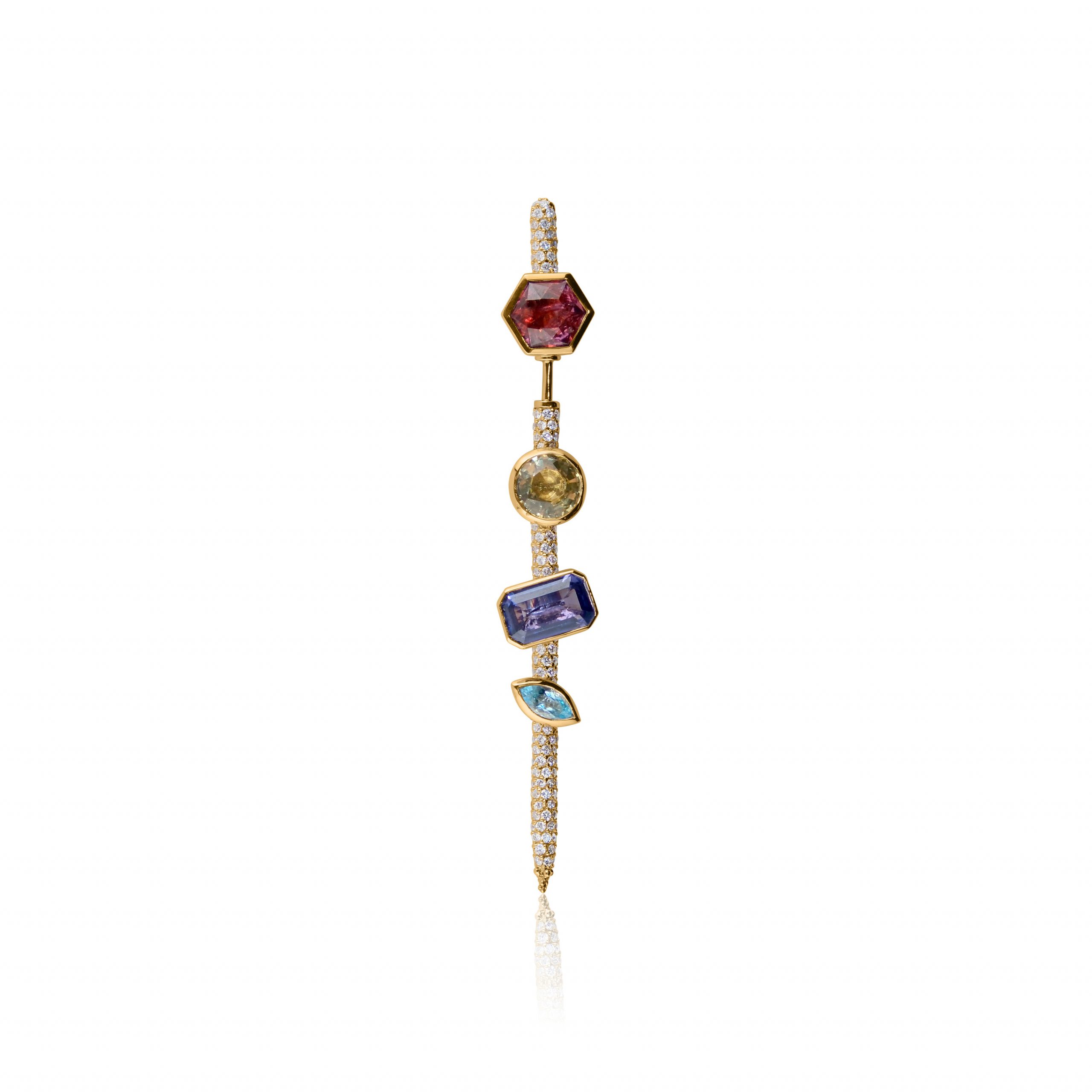
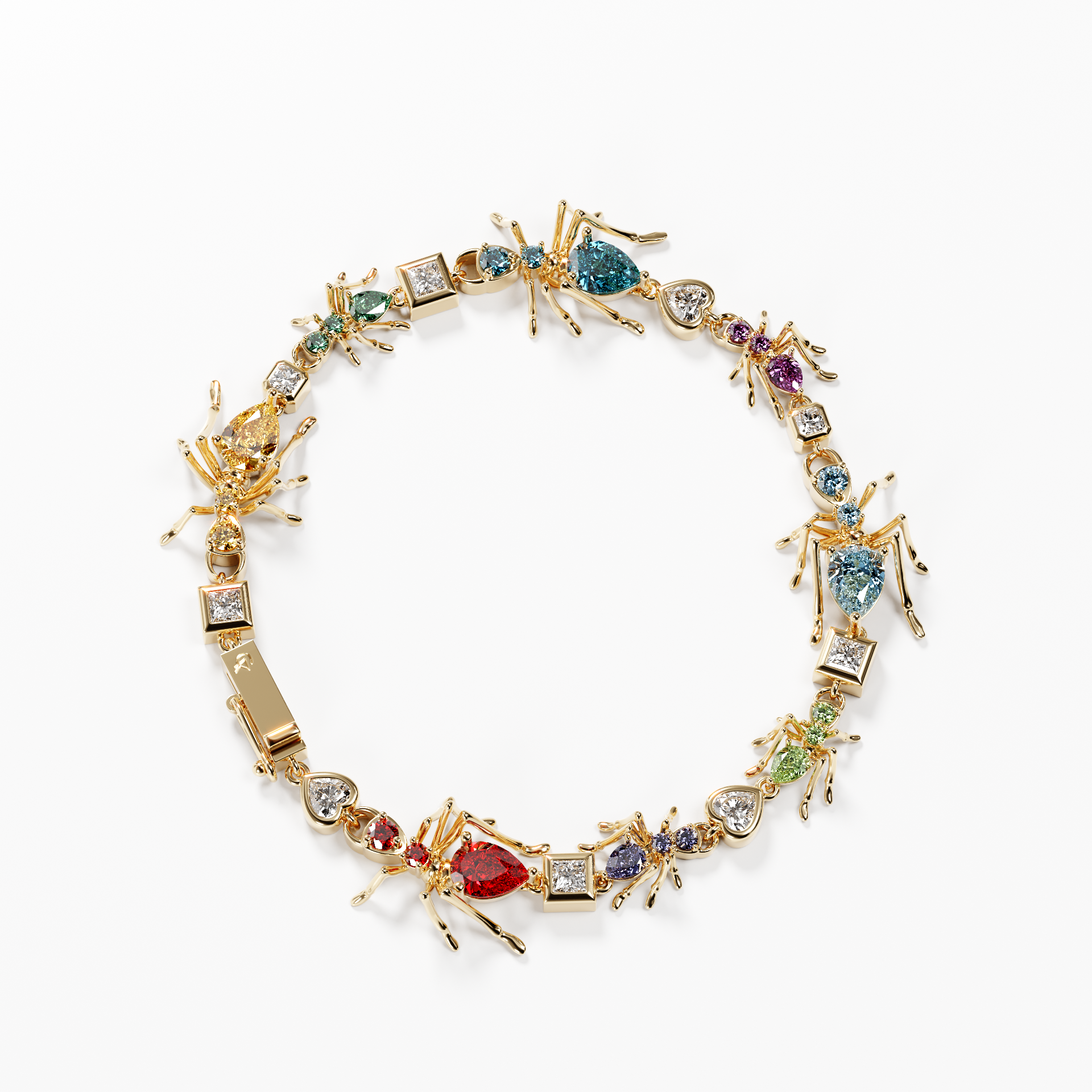
A jewelry piece that holds a particularly meaningful story for me is the Kokoro stud earring, along with the Ant tennis bracelet. Both pieces celebrate boldness and the profound impact that even the smallest things can have. The Kokoro pieces, cherished by my clients and myself, are regarded as sacred heirlooms, symbols of memory, connection, and legacy. Kokoro translates to “Ant” in Yoruba, reflecting the strength and presence found in the smallest forms. Through these designs, I create jewelry that allows the wearer to see themselves within a shared narrative – a story to be treasured and passed down to those they love. For me, these pieces are about strength, heritage, and the enduring beauty of objects imbued with meaning.
Do you see yourself as keeping jewelry making traditions alive, reinventing them, or creating something entirely new?
I see my work as a blend of all three. I honor the traditions of jewelry making- the craftsmanship, attention to detail, and timeless techniques that have been passed down through generations. At the same time, I aim to reinvent them, interpreting these practices through a contemporary lens and infusing each piece with personal meaning, narrative, and sculptural form. Ultimately, my goal is to create something entirely new: jewelry that is both wearable art and a vessel for storytelling, pieces that resonate with the wearer on an intimate and lasting level.
What role does technology play in your design process (e.g., CAD, 3D printing, digital sketching)?
Technology plays a really important role in my design process. I use CAD and 3D printing to experiment with form and scale in ways that wouldn’t be possible by hand alone, and I also enjoy using technology to bring my jewelry into an animated world through CGI and 3D visuals. It allows me to push boundaries, refine details, and visualize pieces from every angle before they’re made in metal and gemstones. Technology lets me be playful with my designs, enhancing the process without replacing the craftsmanship or personal touch that makes each piece meaningful.
What values are reflected in your work (responsible sourcing, sustainability, other etc.), and how do you integrate those values into your collections?
The values reflected in my work center on responsible sourcing, sustainability, and creating pieces with lasting meaning. I make a conscious effort to use ethically mined metals and gemstones, ensuring that every material respects both the environment and the communities involved. Sustainability also guides my approach to design- I create jewelry that is timeless and enduring, pieces meant to be cherished and passed down rather than discarded. My commitment to responsible sourcing also enhances my ability to tell meaningful stories, which is a cornerstone of my brand. These values are integrated into every collection, from the materials I choose to the craftsmanship and storytelling behind each piece, so that every design carries integrity, purpose, and care.
Many younger jewelers emphasize storytelling. What story do you share with your jewelry?
The story I share with my jewelry is one of connection, heritage, and the beauty found in life’s smallest moments. Each piece is designed to be more than an adornment; it is a vessel for memory, emotion, and personal narrative. I create jewelry that invites the wearer to see themselves within a shared story, to feel intimacy, strength, and joy through each design. My pieces are meant to be worn, cherished, and passed down, becoming part of the wearer’s own legacy. Through jewelry, I aim to capture the richness of experience and transform fleeting moments into something tangible, lasting, and deeply meaningful. While I could simply design a ring with a large diamond and gold, for me, the true impact lies in creating conversation-worthy designs that are works of art, carry meaning, and tell a story.
How do your personal identity and background influence your work?
My personal identity and background are central to my work, particularly the duality I experience as a first-generation Nigerian American. Living between two worlds, the richness of my Nigerian heritage and the modern, Western culture I grew up in has shaped the way I approach design. I am drawn to contrasts and balance, creating jewelry that merges tradition with contemporary form, storytelling with sculptural artistry, and personal meaning with universal resonance. This duality allows me to craft pieces that are deeply rooted in heritage while speaking to a broader, modern audience, inviting wearers to find themselves within a shared narrative.
What challenges do you face as a younger jeweler entering or navigating the industry?
As a younger jeweler, one of the biggest challenges is establishing credibility and visibility in an industry that has long been dominated by established houses and traditional networks. Breaking through requires not only exceptional design and craftsmanship but also building relationships, telling a compelling story, and finding ways to connect with a discerning audience. Another challenge is balancing creativity with business realities-bringing ambitious, meaningful designs to life while navigating production, sourcing, and the pressures of scaling a brand. At the same time, these challenges are also opportunities to innovate, define my own voice, and create jewelry that resonates deeply with a new generation of collectors.
How do you balance artistry with the practical demands of running a business?
Balancing artistry with the practical demands of running a business is always a delicate process. I approach it by prioritizing both vision and strategy — allowing creativity to guide the designs while implementing systems to manage production, sourcing, and operations efficiently. Every decision, from material selection and production quantities to collection planning, considers both the artistic integrity of the piece and the realities of running a sustainable business. For me, the two are not in opposition; they inform and strengthen each other, ensuring that the jewelry I create is both meaningful and viable in the market.
What innovative approaches are you using to reach today’s consumer?
To reach today’s consumer, I combine storytelling, technology, and strategic marketing. I use CAD, 3D printing, and CGI to bring jewelry to life virtually, allowing customers to experience each piece before it’s made. I also focus on creating meaningful, conversation-worthy designs and connecting with audiences through in-person events, social media, digital storytelling, and paid marketing campaigns that highlight the craftsmanship and narrative behind each collection.
What do you think Gen Z and Millennials are looking for in jewelry today, compared to older generations?
I believe Gen Z and Millennials are looking for more than just beauty or status in jewelry-they want pieces that have meaning, story, and personal connection. They’re drawn to designs that feel unique, expressive, and reflective of their identity, rather than simply following trends. Compared to older generations, who often valued traditional luxury markers like diamonds or large brand names, younger consumers are more interested in jewelry that tells a story, sparks conversation, and can be worn as an extension of themselves. I believe some also value transparency and sustainability, seeking pieces that align with their values and ethics.
How do you see the role of jewelry evolving for your generation, adornment, investment, self-expression, or all of the above? Any major shifts?
I see jewelry for my generation evolving to serve all of the above: adornment, self-expression, and investment, with a stronger focus on personal meaning and storytelling. There’s also a clear shift toward conscious consumption, with ethically sourced materials and designs meant to be cherished and passed down, rather than disposable.
Do you think social media platforms (Instagram, TikTok, Pinterest) are changing how jewelry is designed, marketed, and sold? How do they affect your business?
Absolutely. Social media platforms like Instagram, TikTok, and Pinterest are transforming every aspect of the jewelry industry- from design to marketing to sales. Designers can see trends emerge in real time, and these platforms encourage creating visually striking, conversation-worthy pieces that translate well digitally. For my business, social media allows me to tell the story behind each piece, connect directly with clients, and reach a global audience without relying solely on traditional retail. It also challenges me to think creatively about presentation, imagery, and content, creating an obligation to make the digital experience as immersive and meaningful as the jewelry itself.
How have mentorship or peer networks played a role in your career so far?
Mentorship and peer networks have been pivotal in my career. Whether it’s a mentor within the industry or someone with experience building, structuring, or selling a company, guidance is invaluable. Entrepreneurship comes with many highs and lows, and having a mentor who has sold a company in the past has helped me navigate challenges, pivot when feeling stuck, and make simple yet impactful decisions. I believe every Gen Z or Millennial entrepreneur should seek out a mentor or peer network, especially if they don’t have a business partner, as the insight and support can be transformative.
Do you collaborate with other designers, artists, or industries to expand your creative practice?
Yes, collaboration plays an important role in expanding my creative practice. Working with other designers, artists, or even industries outside of jewelry allows me to explore new perspectives, experiment with materials and techniques, and push the boundaries of what jewelry can be. These collaborations often spark fresh ideas and unexpected approaches, enriching my work and allowing me to create compelling visuals that are more dynamic, layered, and meaningful.
What role does Ai play in your business (if any)?
AI plays a supportive and exploratory role in my business. I use it to generate concepts, visualize ideas, and experiment with forms before moving forward with visual jewelry animations, which allows me to push creative boundaries more efficiently. I also use AI to help build marketing calendars and conduct in-depth research on the industry. While AI can inspire and accelerate parts of the design process, it never replaces the craftsmanship, storytelling, and personal touch that define each piece. For me, it’s a way to enhance creativity while staying true to the artistry and meaning behind my work.
What are your hopes for the future of the jewelry industry as more Gen Z and Millennial voices rise to the forefront?
As more Gen Z and Millennial voices rise to the forefront, I hope to see major jewelry brands invest in talented small designers and retailers expand their offerings to include independent creators, particularly Black and Brown designers. This is critical because the fine jewelry industry has long been dominated by white men, with 62.8% of jewelers identifying as white compared to just 2.7% identifying as Black or African American. This lack of diversity is reflected not only in the workforce but also in leadership, marketing, and the stories being told. Elevating a broader range of voices is essential to fostering innovation, equity, and a more vibrant, inclusive creative landscape for the future.
What advice would you give to other young jewelers just starting out?
If you have a story to tell or visuals to share with the world, don’t stop until your story is heard and your work is seen. Stay persistent, stay true to your vision, and let your passion guide your journey- the world needs your voice and your creativity.